Iraq's Economic Priorities Amid the Strait of Hormuz Crisis and Expected Scenarios
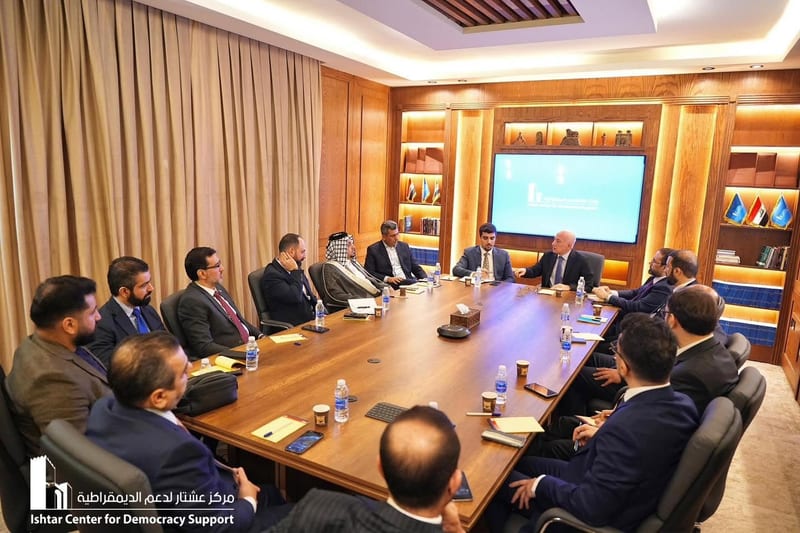
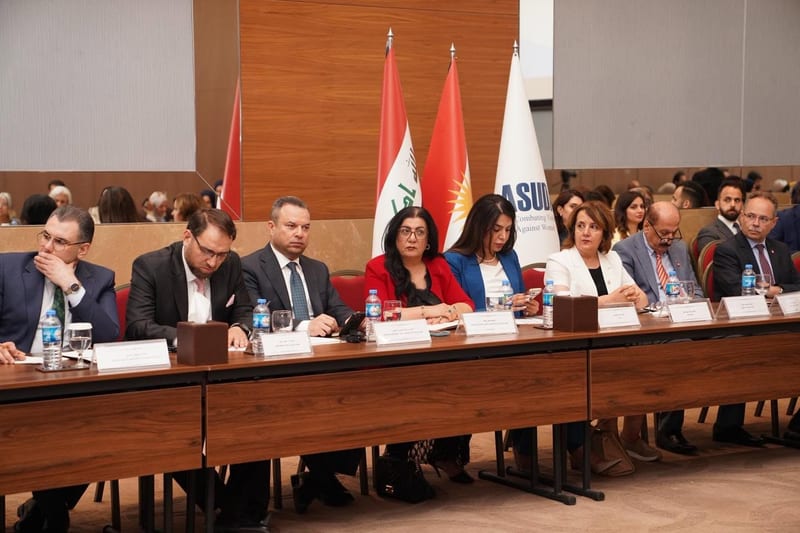
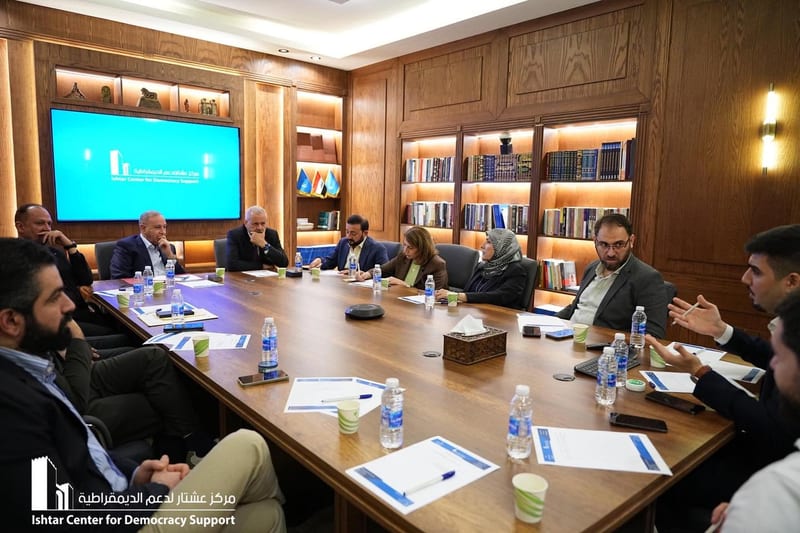
Ishtar Center for Democracy Support held a closed roundtable discussion at its headquarters in Baghdad titled: "Iraq's Economic Priorities Amid the Strait of Hormuz Crisis and Expected Scenarios." Key Speaker: Dr. Samir Neama Fakhri – Director General of the Statistics and Research Department at the Central Bank of Iraq. Discussant: Abdul Hussein Al-Haneen – Economist, Energy Expert, and Former Government Advisor. The roundtable brought together a distinguished group of researchers, specialists, and observers to examine the potential economic implications of the Strait of Hormuz crisis for Iraq and to discuss policy options for enhancing the country's economic resilience. The participants concluded with the following recommendations: Strengthen border and customs control through enhanced monitoring, the deployment of joint security and economic inspection teams at official border crossings, the closure of unofficial crossings, and the immediate automation of customs and tax procedures to standardize tariff collection and detect manipulation of import declarations. Harmonize customs policy between the Federal Government and the Kurdistan Region by implementing the unified customs tariff through the ASYCUDA system, using the same tariff schedules applied in Baghdad at the Region's northern border crossings as a prerequisite for their integration into the ASYCUDA platform. Enhance high-level coordination between the Ministry of Finance and the Central Bank of Iraq to establish policies that ensure the sustainability of international reserves and maintain public debt—both domestic and external—within sustainable levels. Adopt prudent fiscal and financial policies to reduce the financing gap or maintain it within safe limits. Develop alternative export routes for Iraqi oil to safeguard the continuity of government revenues, given that oil still accounts for more than 90% of Iraq's confirmed public revenues. Pursue a development-oriented monetary policy that supports domestic production, particularly in key productive sectors such as agriculture and industry. Reassess the real value of the US dollar against the Iraqi dinar to create more attractive conditions for foreign investment. Strengthen the tracking and monitoring of Iraqi currency circulation both inside and outside Iraq, while unifying the design standards and specifications of all Iraqi currency denominations. Expand the Central Bank of Iraq's lending programs for young people, particularly by increasing financing for small and medium-sized enterprises to reduce dependence on public sector employment. Expand the Central Bank's residential solar energy financing initiative, provided that appropriate technical standards are met to ensure compatibility with the national electricity grid.