Minorities and Political Representation in Iraq: A Legislative and Institutional Analysis
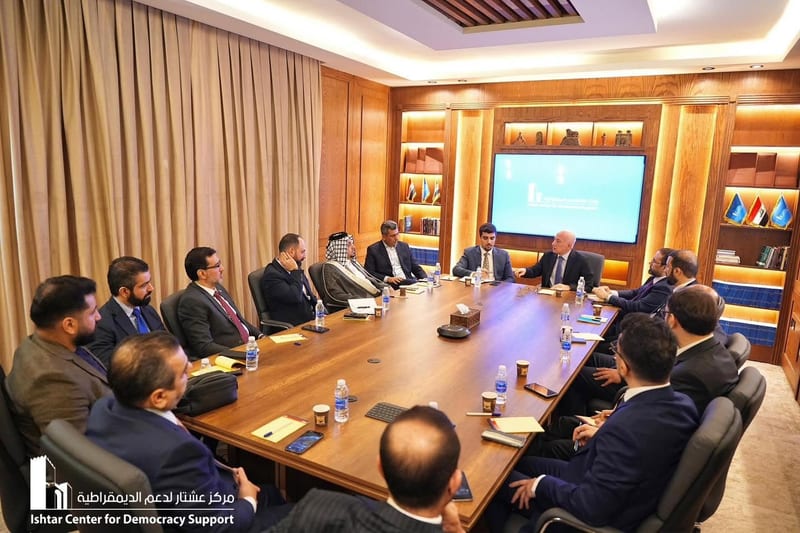
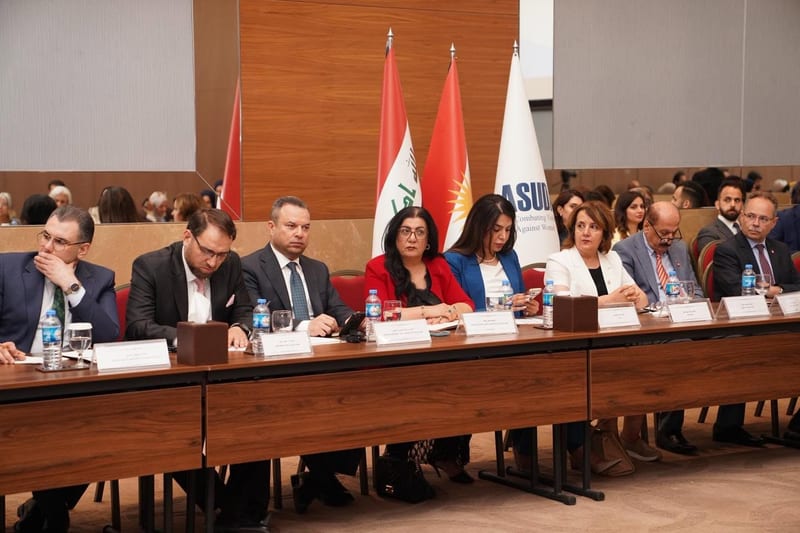
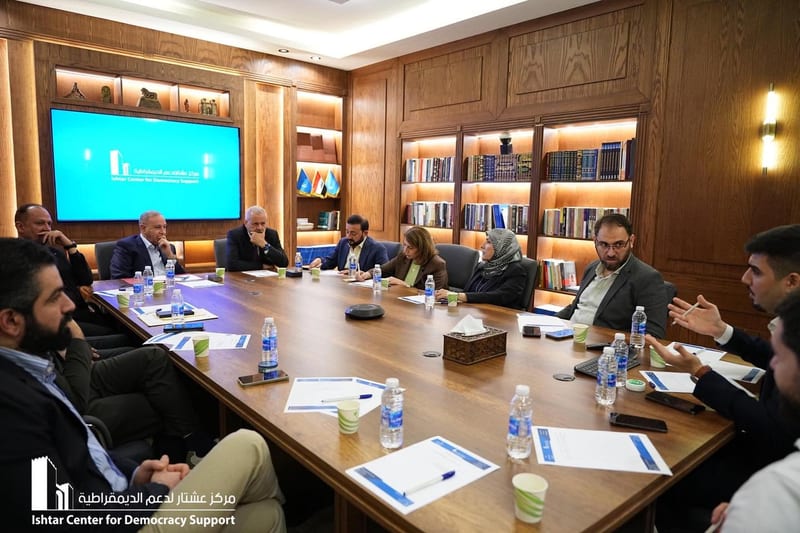
Ishtar Hosts the First “Parliamentary Dialogues” Session… Calls for a “New Social Contract” to Establish a State of Citizenship Baghdad On Monday, the Ishtar Center for Democracy Support held the first session of its “Parliamentary Dialogues,” hosting the Head of the Christian Sawyana Bloc, MP Kildou Ramzi Oghanna; the Head of the Yazidi Cause Alliance, MP Murad Ismael; and MP Khalid Al-Obaidi of the Taqaddum Bloc and former Minister of Defense. The session was also attended by a number of political and academic figures, as well as civil society activists from across Iraq. The session opened with remarks by MP Kildou Ramzi Oghanna, who reviewed the national history of the Christian community in Iraq. He highlighted the role of Christians in the establishment of the modern Iraqi state, noting their contribution to shaping political awareness and laying the early foundations of Iraq’s political entity. He emphasized that Christian intellectual and cultural elites played a prominent role in shaping public opinion and strengthening national identity. He added that Iraq’s political trajectory later underwent profound transformations, as coups and forced changes disrupted the national landscape and weakened the role of the political elite, even though political awareness remained a core pillar of society. Over time, he noted, popular movements emerged as the main driving force of civic action in the current phase, expressing aspirations for change, freedom, and democracy. Oghanna stated that Iraq today faces critical crossroads that can be understood through two central paths: democratic change and freedom. He explained that the rise of local political parties was accompanied by a complex political formation marked at times by a loss of trust between citizens and political institutions. This has led to limited social options, declining public confidence, and increased migration. He stressed that Iraqis view the future of their country with clear concern—not due to a lack of internal capacity or potential, but because of ongoing crises and regional and international tensions that have affected overall stability. In this context, he pointed to the Kurdistan Region as a relatively stable model within a turbulent environment. • The Need for a Genuine National Project MP Murad Ismael, Head of the Yazidi Cause Alliance, addressed the existential challenges facing Iraq’s minority communities, particularly the Yazidis, especially following the genocide committed against them by ISIS. He emphasized the need for genuine transformation in Iraq’s political reality to fully integrate minority communities into the broader national framework. Ismael stated that reform and national revival now require real change. The continued popular movement reflects the vitality of Iraqi society and its desire for reform. However, the success of any future path depends on the seriousness of the next political phase and a comprehensive reassessment of Iraq’s political landscape—particularly in the upcoming elections, which must be accompanied by rebuilding trust between citizens and the political system. He underscored the urgent need to move beyond traditional elite thinking toward a more realistic and forward-looking vision capable of addressing social and political transformations. He called for transforming minority demands—alongside broader public demands—into a genuine national project that prioritizes Iraq’s future above all else. • Quota Has Weakened the State MP Khalid Al-Obaidi, former Minister of Defense, stated that Iraqi state institutions continue to suffer from deep structural imbalances that prevent them from effectively addressing the crises facing citizens. He argued that the political quota system (muhasasa) has significantly weakened state institutions. In his remarks, Al-Obaidi noted that successive governments have shown clear failure in managing key national files. The absence of a unifying national vision, he said, has deepened divisions and turned temporary crises into permanent structures. The dominance of political and sectarian power-sharing has undermined state institutions and limited their ability to deliver services and achieve social justice, further eroding public trust in the political process. He added that Iraqis’ growing concern about the country’s future stems not from a lack of resources or internal pathways, but from the accumulation of political crises and overlapping regional and international pressures. He stressed that genuine reform cannot occur without dismantling the quota system and preventing the exploitation of state institutions for partisan interests. Any serious reform project, he said, must ensure the full independence of security and judicial institutions, reinforcing the rule of law and restoring state authority. • A New Social Contract Dr. Saad Salloum, Professor of Political Science at Al-Mustansiriya University, called for a new social contract based on citizenship and rising above the interests of political factions. He stressed the need to redefine governance as public service rather than political spoils. Salloum argued that Iraq does not need new slogans as much as it needs a different political practice—one that ends the cycle of recurring crises and lays the foundation for a state of citizenship, justice, and institutions. The upcoming political experience, if it is to succeed, must be serious and not merely a revised repetition of past failures. He emphasized that a successful future trajectory requires placing national interest above partisan agendas and confronting past mistakes with genuine will, clear vision, and courageous decision-making. ________________________________________ • National Convergence Dr. Mohammed Hossam Al-Husseini, a leader in the National Wisdom Movement, called for greater coordination among representatives of minority communities in Parliament, followed by engagement with influential national blocs, to promote national convergence among Iraq’s diverse components. He also suggested replacing the term “minorities” with terminology that better reflects positive distinction and recognition, noting that the term does not appear in the Iraqi Constitution or the UN Charter. He outlined a three-step approach to resolving community-related challenges: coordination among minority quota representatives in Parliament; engagement with influential forces within their respective regions; and alignment with religious and social authorities. He stated that this framework would enable these groups to secure gains aligned with their constituents’ expectations and strengthen public trust. ________________________________________ • Recommendations The first session of the “Parliamentary Dialogues” concluded with several key recommendations: • Promote a culture of citizenship in state-building and ensure equal opportunities beyond partisan or sectarian affiliations. • Support national competencies, particularly from minority communities, and involve them in decision-making rather than marginalizing them or pushing them toward migration. • Address economic challenges as a central pillar of any national revival project, ensuring justice and equality in governance. • Create a secure and socially supportive environment that reduces minority migration and preserves Iraq’s diverse national, religious, and ethnic identities. • Advance political reform based on integrity and transparency to restore public trust in governance in both Baghdad and the Kurdistan Region.